A Complete Guide to Accurate Insurance Verification for Healthcare Providers
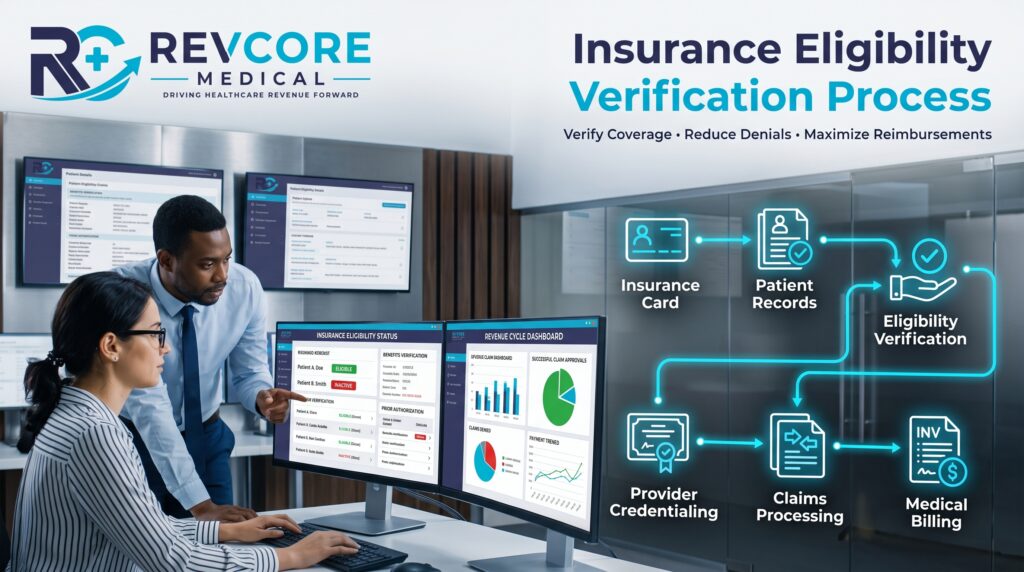
The Insurance Eligibility Verification Process is one of the most critical steps in the healthcare revenue cycle. Before medical services are provided, healthcare organizations must confirm that a patient’s insurance coverage is active, verify benefits, and determine financial responsibility. An accurate Insurance Eligibility Verification Process reduces claim denials, improves reimbursement rates, minimizes billing errors, and creates a smoother experience for both providers and patients.
At RevCore Medical, we help healthcare providers throughout the United States streamline the Insurance Eligibility Verification Process through efficient verification workflows and complete Revenue Cycle Management solutions. Along with Eligibility Verification, our services include Medical Billing, Medical Coding, Provider Credentialing, Prior Authorization, AR Management, Medical Billing Audits, No Cost Billing Analysis, and complete Revenue Cycle Management support.
This guide explains the Insurance Eligibility Verification Process, why it matters, its key steps, common challenges, and how healthcare organizations can improve financial performance through accurate insurance verification.
What is the Insurance Eligibility Verification Process?
The Insurance Eligibility Verification Process is the procedure healthcare providers use to confirm a patient’s health insurance coverage before delivering medical services.
The process verifies:
- Active insurance status
- Patient eligibility
- Covered medical services
- Copayments
- Deductibles
- Coinsurance
- Out-of-pocket limits
- Referral requirements
- Prior authorization requirements
- Policy limitations
Completing the Insurance Eligibility Verification Process before an appointment helps practices avoid billing issues and improve reimbursement accuracy.
Why the Insurance Eligibility Verification Process Is Important
Insurance verification directly affects the financial health of every healthcare organization.
An effective Insurance Eligibility Verification Process helps providers:
- Reduce claim denials
- Increase clean claim rates
- Improve cash flow
- Prevent billing errors
- Verify patient financial responsibility
- Reduce payment delays
- Improve patient satisfaction
- Strengthen Revenue Cycle Management
- Improve reimbursement accuracy
Without proper verification, even correctly coded claims may be denied because insurance information is incomplete or outdated.
Key Steps in the Insurance Eligibility Verification Process
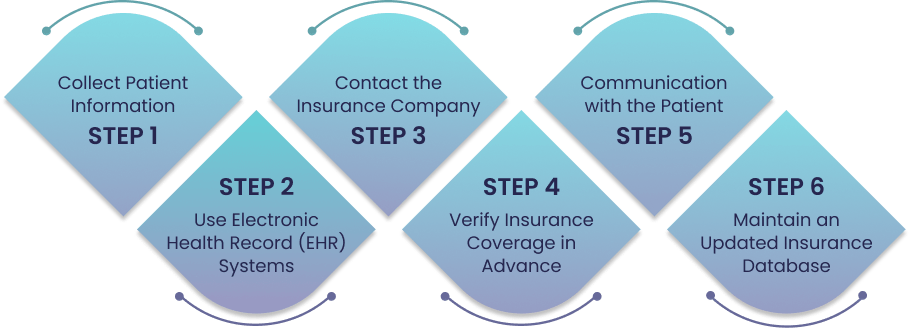
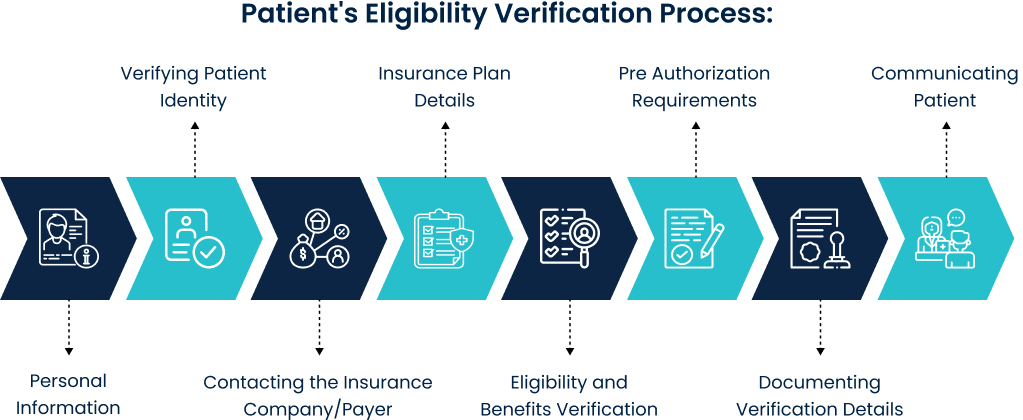
A structured Insurance Eligibility Verification Process ensures every patient account is reviewed accurately before services are rendered.
1. Collect Patient Information
Accurate patient registration is the foundation of successful insurance verification.
Information collected includes:
- Full legal name
- Date of birth
- Address
- Contact information
- Insurance provider
- Member ID
- Group number
- Policyholder information
Even small registration errors can lead to denied claims.
2. Verify Active Insurance Coverage
Healthcare staff must confirm that the patient’s insurance policy is active on the date of service.
Verification includes:
- Effective coverage dates
- Policy status
- Network participation
- Coverage termination dates
- Primary and secondary insurance
Accurate verification prevents reimbursement delays and rejected claims.
3. Confirm Patient Benefits
The next step in the Insurance Eligibility Verification Process is reviewing available insurance benefits.
Benefits verification includes:
- Office visit coverage
- Specialist coverage
- Diagnostic testing
- Surgical procedures
- Preventive care
- Therapy services
- Emergency services
- Telehealth benefits
Understanding covered services helps providers avoid unexpected payment issues.
4. Verify Deductibles and Copayments
Patients are often responsible for a portion of healthcare costs.
Verification should identify:
- Remaining deductible
- Copayment amount
- Coinsurance percentage
- Out-of-pocket maximum
- Patient financial responsibility
Providing accurate cost estimates improves billing transparency and patient satisfaction.
5. Determine Prior Authorization Requirements
Many healthcare services require insurance approval before treatment.
The Insurance Eligibility Verification Process should identify whether prior authorization is needed for:
- Advanced imaging
- Surgical procedures
- Specialty medications
- Physical therapy
- Medical equipment
- Specialist referrals
Early identification helps prevent treatment delays and claim denials.
6. Confirm Referral Requirements
Some insurance plans require referrals from a primary care physician before specialty services are covered.
Verification should confirm:
- Referral requirements
- Referral validity
- Referring provider information
- Authorization numbers
Proper referral management supports successful claim approval.
7. Document Verification Results
Every verification activity should be documented within the practice management system.
Documentation should include:
- Verification date
- Insurance representative
- Reference number
- Coverage details
- Authorization requirements
- Patient responsibility
- Notes regarding limitations
Accurate documentation protects providers during claim submission and future audits.
Benefits of an Accurate Insurance Eligibility Verification Process
A consistent Insurance Eligibility Verification Process improves both operational efficiency and financial performance.
Healthcare organizations benefit from:
- Higher clean claim rates
- Reduced insurance denials
- Faster reimbursements
- Improved patient collections
- Better cash flow
- Fewer billing corrections
- Enhanced patient satisfaction
- Lower administrative costs
- Improved Revenue Cycle Management
Investing in verification accuracy strengthens the entire healthcare reimbursement process.
Common Challenges in Insurance Eligibility Verification
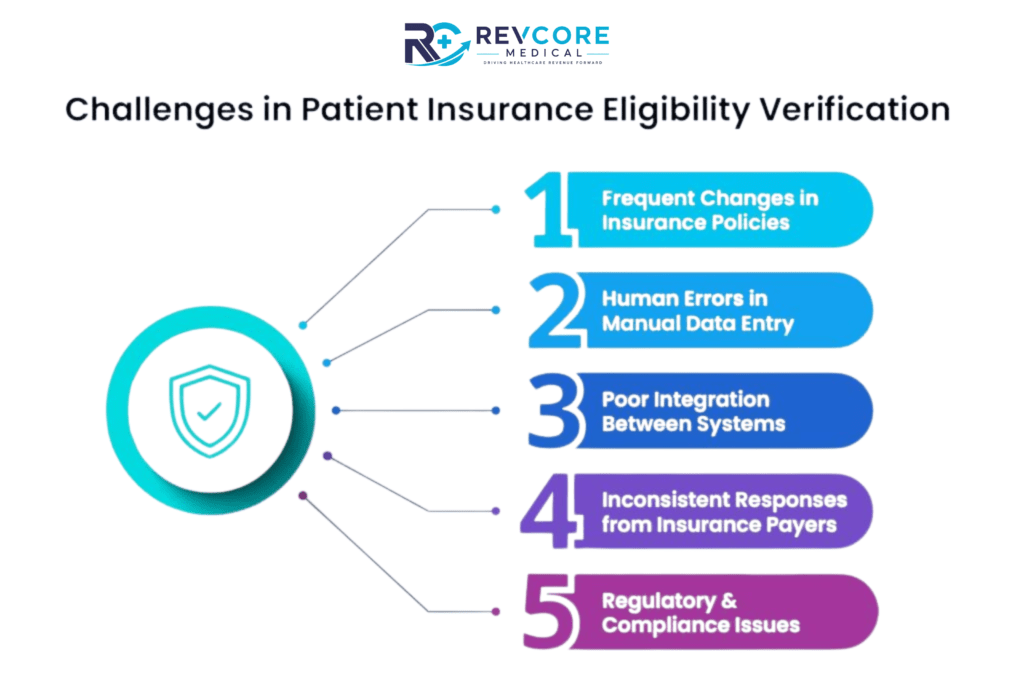
Despite its importance, many practices face challenges during the Insurance Eligibility Verification Process.
Common issues include:
- Incomplete patient information
- Expired insurance policies
- Frequent payer policy changes
- Incorrect member identification numbers
- Manual verification delays
- Limited payer communication
- Missing referral documentation
- Authorization misunderstandings
- Coverage exclusions
- Coordination of benefits issues
Addressing these challenges requires experienced verification specialists and efficient workflows.
How RevCore Medical Simplifies the Insurance Eligibility Verification Process
RevCore Medical provides comprehensive Eligibility Verification services designed to improve claim accuracy and reduce reimbursement delays.
Our verification specialists:
- Verify insurance coverage before appointments
- Confirm patient benefits
- Review deductibles and copayments
- Identify prior authorization requirements
- Validate referral requirements
- Document verification details
- Communicate with insurance carriers
- Support billing teams with accurate eligibility information
By streamlining the Insurance Eligibility Verification Process, we help healthcare providers improve collections while minimizing administrative burden.
Additional Revenue Cycle Management Services
RevCore Medical offers complete Revenue Cycle Management solutions that work together with Eligibility Verification to maximize healthcare revenue.
Our professional services include:
- Revenue Cycle Management
- Medical Billing
- Medical Coding
- Provider Credentialing
- Prior Authorization
- AR Management
- Medical Billing Audit
- No Cost Billing Analysis
These integrated solutions help healthcare organizations optimize every stage of the reimbursement process while improving financial performance.
Best Practices for an Effective Insurance Eligibility Verification Process
Healthcare organizations can improve reimbursement accuracy by implementing proven verification strategies.
Follow these best practices to strengthen the Insurance Eligibility Verification Process:
- Verify insurance at every patient visit.
- Confirm patient demographics before verification.
- Validate primary and secondary insurance coverage.
- Review deductibles, copayments, and coinsurance.
- Check referral requirements before scheduling.
- Obtain prior authorizations when required.
- Maintain detailed verification documentation.
- Monitor payer policy updates regularly.
- Use automated eligibility verification tools.
- Train staff on insurance verification procedures.
These best practices help reduce billing errors, improve clean claim rates, and support a stronger Revenue Cycle Management process.
How Technology Improves the Insurance Eligibility Verification Process
Technology has transformed the way healthcare providers manage insurance verification.
Modern verification systems offer:
- Real-time insurance eligibility checks
- Electronic payer connectivity
- Automated benefit verification
- Integrated Electronic Health Records (EHR)
- Practice Management Software integration
- Automated verification alerts
- Secure patient information management
- Reporting and verification analytics
By integrating technology into the Insurance Eligibility Verification Process, healthcare organizations reduce manual work, improve efficiency, and accelerate reimbursement.
Why Outsource the Insurance Eligibility Verification Process?
Managing insurance verification internally can consume valuable staff time and increase the risk of errors. Outsourcing the Insurance Eligibility Verification Process allows healthcare providers to focus on patient care while experienced professionals handle verification accurately and efficiently.
Benefits of outsourcing include:
- Faster insurance verification
- Reduced administrative workload
- Improved claim accuracy
- Lower denial rates
- Better patient financial transparency
- Increased clean claim submissions
- Improved cash flow
- Enhanced Revenue Cycle Management
- Better compliance with payer requirements
- Scalable support for growing practices
RevCore Medical delivers reliable Eligibility Verification services tailored to practices of all sizes across the United States.
Why Choose RevCore Medical?
RevCore Medical is committed to helping healthcare providers maximize revenue through complete Revenue Cycle Management solutions.
Why healthcare providers partner with us:
- Experienced Revenue Cycle Management professionals
- Certified Medical Billing and Medical Coding specialists
- Accurate Eligibility Verification services
- Efficient Prior Authorization support
- Comprehensive Provider Credentialing
- Dedicated AR Management specialists
- Medical Billing Audits
- No Cost Billing Analysis
- Transparent reporting
- Nationwide healthcare support
Our integrated approach helps providers reduce denials, improve reimbursement accuracy, and optimize every stage of the revenue cycle.
Healthcare Specialties We Support
RevCore Medical proudly serves a wide range of healthcare specialties, including:
- Family Medicine
- Internal Medicine
- Cardiology
- Orthopedics
- Dermatology
- Neurology
- Gastroenterology
- Psychiatry
- Behavioral Health
- Radiology
- Pain Management
- Urgent Care
- Physical Therapy
- Chiropractic Care
- Dental Practices
- Home Health Agencies
- Occupational Therapy
- Multi-Specialty Clinics
Each specialty has unique payer requirements, and our verification specialists ensure accurate insurance eligibility verification for every patient encounter.
Major Service Areas Across the United States
RevCore Medical proudly provides the Insurance Eligibility Verification Process and comprehensive Revenue Cycle Management services to healthcare providers throughout the United States. We serve major metropolitan areas including New York City, Los Angeles, Chicago, Houston, Dallas, Phoenix, Philadelphia, San Antonio, San Diego, San Jose, Austin, Jacksonville, Fort Worth, Columbus, Charlotte, Indianapolis, Seattle, Denver, Boston, Nashville, Atlanta, Miami, Orlando, Tampa, Las Vegas, Sacramento, Minneapolis, Kansas City, Washington, D.C., Baltimore, Portland, Salt Lake City, Raleigh, Cleveland, Detroit, Cincinnati, St. Louis, Pittsburgh, and surrounding communities. Our scalable solutions also support suburban and rural healthcare organizations nationwide.
Frequently Asked Questions
What is the Insurance Eligibility Verification Process?
The Insurance Eligibility Verification Process confirms a patient’s insurance coverage, benefits, deductibles, copayments, and authorization requirements before medical services are provided.
Why is insurance eligibility verification important?
It reduces claim denials, improves reimbursement accuracy, prevents billing errors, and enhances patient financial transparency.
When should insurance eligibility be verified?
Insurance eligibility should be verified before every patient visit, even for returning patients, as coverage details may change.
What information is verified during the process?
Providers verify insurance status, benefits, deductibles, copayments, coinsurance, referrals, prior authorization requirements, and coverage limitations.
Can eligibility verification reduce claim denials?
Yes. Accurate eligibility verification significantly reduces denials caused by inactive insurance, missing authorizations, or incorrect patient information.
How does eligibility verification improve Revenue Cycle Management?
It increases clean claim rates, accelerates reimbursements, improves cash flow, and minimizes administrative rework.
Does RevCore Medical provide nationwide Eligibility Verification services?
Yes. RevCore Medical serves healthcare providers throughout the United States with complete Eligibility Verification and Revenue Cycle Management solutions.
What other services does RevCore Medical offer?
Our services include Revenue Cycle Management, Medical Billing, Medical Coding, Provider Credentialing, Prior Authorization, AR Management, Medical Billing Audits, and No Cost Billing Analysis.
Why should providers outsource Eligibility Verification?
Outsourcing improves efficiency, reduces staff workload, minimizes billing errors, and helps practices receive faster reimbursements.
How can I get started with RevCore Medical?
Contact RevCore Medical today for a free consultation and a No Cost Billing Analysis to optimize your revenue cycle.
Partner with RevCore Medical Today
An accurate Insurance Eligibility Verification Process is the foundation of successful Revenue Cycle Management. By verifying coverage before treatment, healthcare providers can reduce claim denials, improve cash flow, and enhance the patient financial experience.
Whether your organization needs Eligibility Verification, Medical Billing, Medical Coding, Provider Credentialing, Prior Authorization, AR Management, or complete Revenue Cycle Management services, RevCore Medical delivers customized solutions that improve operational efficiency and maximize reimbursement.
Request Your FREE No Cost Billing Analysis Today!
✔ Reduce Insurance Claim Denials
✔ Improve Clean Claim Rates
✔ Accelerate Insurance Reimbursements
✔ Increase Practice Revenue
✔ Optimize Your Revenue Cycle
RevCore Medical – Your Trusted Revenue Cycle Management Partner Across the United States.