
Assignment of Benefits: A Complete Guide to Healthcare Billing and Reimbursement

Introduction Assignment of Benefits is an important part of the healthcare revenue cycle because it determines how insurance payments may be directed and processed after covered medical services are provided. When a patient authorizes an Assignment of Benefits, the healthcare provider may be permitted to receive applicable insurance payments directly rather than requiring the patient […]
Modifier 54: The Ultimate Guide to Accurate Surgical Billing and Reimbursement

Surgical billing requires precise coding to ensure healthcare providers receive appropriate reimbursement for the services they perform. Among the many CPT modifiers used in medical billing, Modifier 54 plays a vital role in accurately reporting surgical care when the operating physician performs only the surgical procedure while another qualified provider manages preoperative or postoperative care. […]
Modifier 25: The Complete Guide to Accurate Medical Billing and Maximum Reimbursement
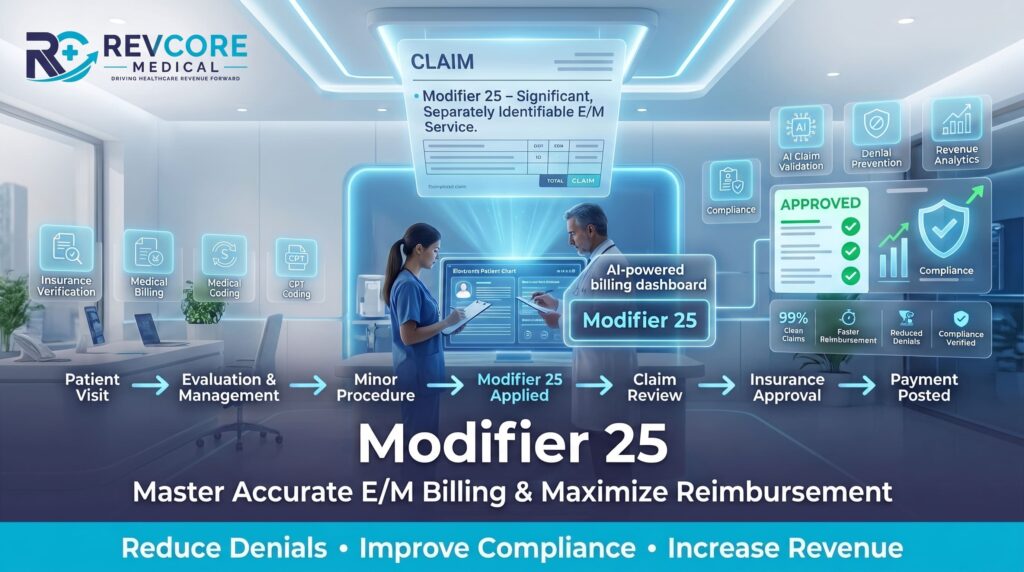
Correct modifier usage is one of the most important factors in successful medical billing, and Modifier 25 remains one of the most closely reviewed modifiers by Medicare and commercial insurance payers. When used appropriately, Modifier 25 allows healthcare providers to receive reimbursement for a significant, separately identifiable Evaluation and Management (E/M) service performed on the […]
Step-by-Step Process of Handling PIP Claims in Medical Billing

Successfully managing PIP Claims is essential for healthcare providers treating patients injured in motor vehicle accidents. Personal Injury Protection (PIP) insurance claims follow unique billing rules, documentation requirements, filing deadlines, and payer regulations that differ significantly from standard commercial insurance claims. Understanding the PIP Claims helps providers reduce claim denials, improve reimbursement rates, and maintain […]