

Improve Financial Performance with Smarter Revenue Cycle Management
Healthcare organizations across the United States face increasing pressure to maintain profitability while delivering exceptional patient care. One of the most effective ways to strengthen financial stability is by understanding Revenue Cycle Management in Medical Practices. Every stage of the revenue cycle—from patient scheduling to final payment—affects reimbursement, cash flow, and operational efficiency.
At RevCore Medical, we help healthcare providers optimize every phase of their revenue cycle through comprehensive Revenue Cycle Management (RCM) solutions. Our services include Medical Billing, Medical Coding, Provider Credentialing, Prior Authorization, Eligibility Verification, AR Management, Medical Billing Audits, and No Cost Billing Analysis. By improving each component of the billing process, medical practices can reduce claim denials, accelerate reimbursements, and maximize revenue.
This guide explains Revenue Cycle Management in Medical Practices using practical strategies that support sustainable financial growth.
What s Revenue Cycle Management?
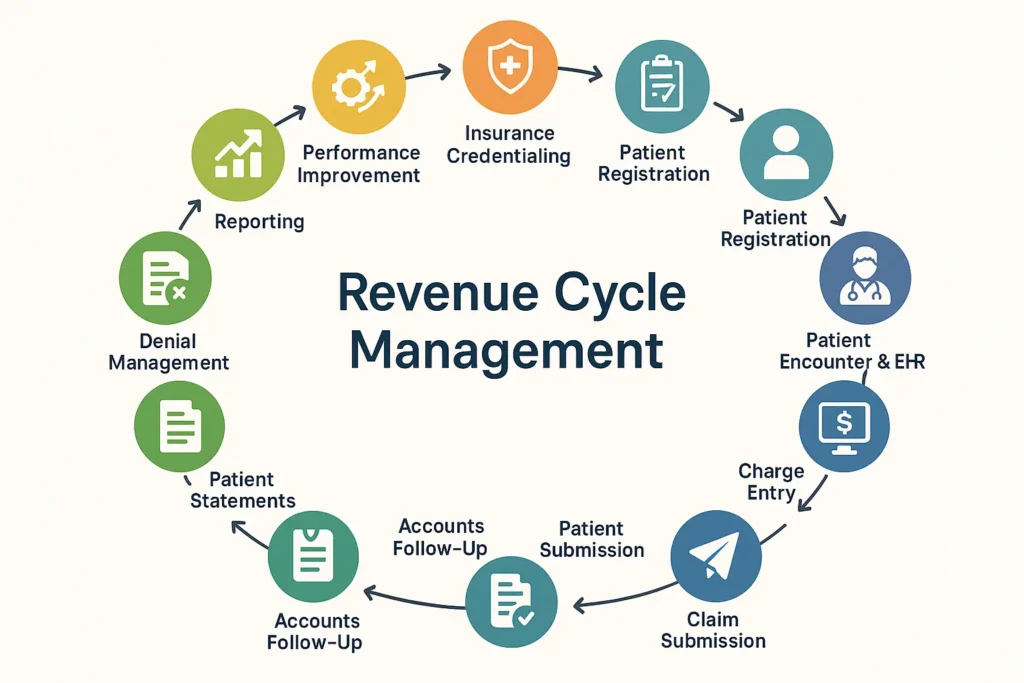
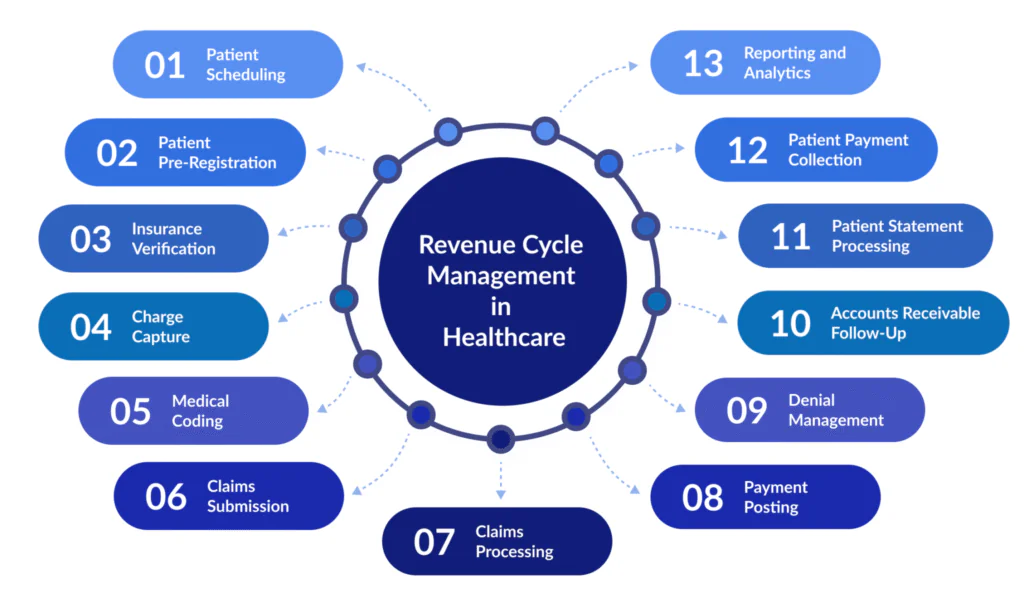
Revenue Cycle Management (RCM) is the complete financial process that healthcare providers use to manage patient revenue from appointment scheduling through final payment collection.
A successful revenue cycle includes:
- Patient registration
- Insurance eligibility verification
- Provider credentialing
- Prior authorization
- Medical coding
- Medical billing
- Claims submission
- Payment posting
- Denial management
- Accounts receivable management
- Patient collections
- Financial reporting
Every step influences reimbursement accuracy and overall practice profitability. Understanding Revenue Cycle Management in Medical Practices begins with optimizing each of these processes.
Why Revenue Cycle Management Matters
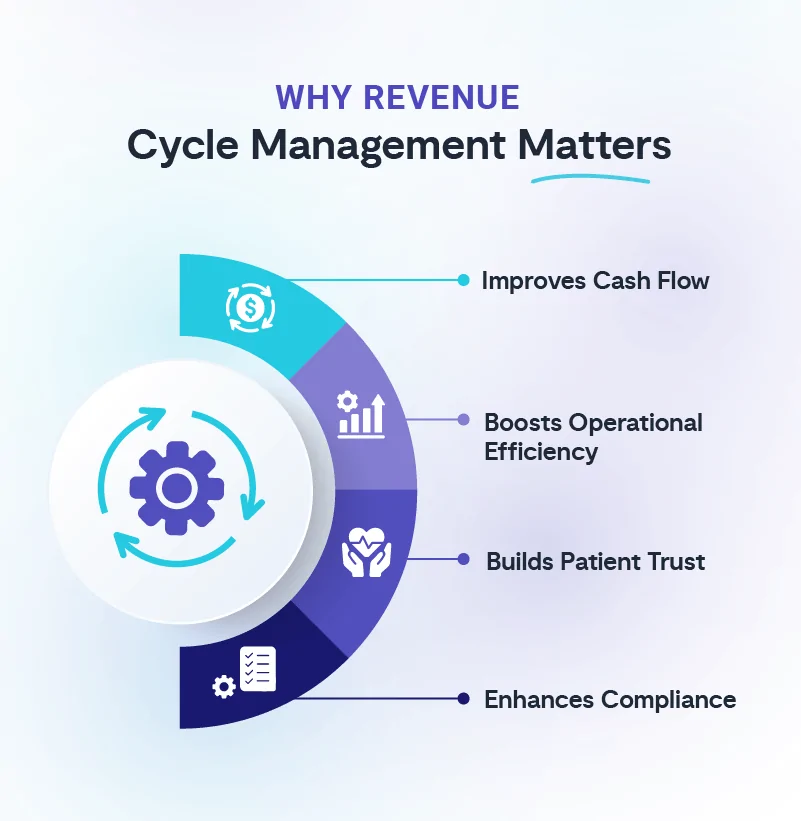
An efficient revenue cycle improves both operational and financial performance.
Benefits include:
- Higher clean claim rates
- Faster reimbursements
- Reduced claim denials
- Improved cash flow
- Better patient satisfaction
- Greater financial transparency
- Lower administrative costs
- Increased profitability
Medical practices that continually evaluate Revenue Cycle Management in Medical Practices are better positioned to remain financially healthy in a competitive healthcare environment.
How to Improve Revenue Cycle Management in Medical Practices
1. Strengthen Patient Registration
Accurate patient registration is the foundation of successful Revenue Cycle Management in medical practices.
Healthcare providers should verify:
- Patient demographics
- Insurance information
- Contact details
- Referral information
- Employer information when applicable
Even small registration errors can lead to denied claims, delayed reimbursements, and unnecessary administrative work.
2. Perform Accurate Eligibility Verification
Insurance verification should be completed before every patient visit.
Effective eligibility verification includes:
- Active insurance confirmation
- Copayment verification
- Deductible review
- Coinsurance validation
- Coverage limitations
- Out-of-network status
RevCore Medical provides comprehensive Eligibility Verification services that help practices reduce billing errors and improve first-pass claim acceptance.
3. Complete Prior Authorization Before Treatment
Many procedures, imaging services, specialty medications, and surgeries require prior authorization.
A streamlined prior authorization process helps:
- Reduce treatment delays
- Prevent claim denials
- Improve payer compliance
- Increase reimbursement accuracy
Our Prior Authorization specialists communicate directly with insurance companies to secure approvals quickly and efficiently.
4. Maintain Accurate Medical Coding
Medical coding directly affects reimbursement accuracy.
Certified coders should ensure:
- Correct ICD-10 diagnosis codes
- Accurate CPT procedure codes
- Proper HCPCS coding
- Modifier accuracy
- Compliance with payer guidelines
Accurate coding minimizes denials while improving reimbursement rates.
5. Optimize Medical Billing Processes
Efficient billing workflows reduce administrative delays.
Best practices include:
- Timely charge entry
- Daily claim submission
- Electronic billing
- Billing quality checks
- Automated workflow management
RevCore Medical’s Medical Billing specialists focus on reducing errors while accelerating payment cycles.
6. Improve Clean Claim Rates
Submitting clean claims the first time significantly improves revenue.
Healthcare providers should:
- Review claims before submission
- Verify coding accuracy
- Confirm patient eligibility
- Validate provider credentials
- Ensure complete documentation
Higher clean claim rates result in fewer denials and faster reimbursements.
7. Focus on Denial Prevention
Preventing denials is more cost-effective than correcting them.
Common denial causes include:
- Incorrect coding
- Missing documentation
- Expired insurance coverage
- Authorization issues
- Credentialing problems
RevCore Medical continuously monitors denial trends to identify root causes and implement corrective strategies before revenue is lost.
8. Strengthen AR Management
Outstanding accounts receivable directly impact cash flow.
Effective AR Management includes:
- Daily claim follow-up
- Aging report analysis
- Insurance follow-up
- Patient balance collections
- Payment reconciliation
Reducing aging accounts improves liquidity and strengthens overall financial performance.
9. Keep Provider Credentialing Up to Date
Expired credentials can interrupt reimbursement and delay claim processing.
Healthcare providers should routinely monitor:
- State licenses
- DEA registrations
- Board certifications
- CAQH profiles
- Payer enrollment status
RevCore Medical manages the complete credentialing lifecycle to help practices avoid costly interruptions.
10. Conduct Regular Medical Billing Audits
Routine billing audits help identify hidden revenue opportunities.
A comprehensive audit evaluates:
- Coding accuracy
- Billing compliance
- Denial trends
- Revenue leakage
- Workflow efficiency
- Documentation quality
Combined with our No Cost Billing Analysis, these audits provide actionable recommendations to improve financial performance.
11. Use Technology and Automation
Modern healthcare practices benefit significantly from automation. Leveraging advanced Revenue Cycle Management in medical practices software reduces manual work, improves claim accuracy, and accelerates reimbursements.
Useful technologies include:
- Electronic Health Records (EHR)
- Practice Management Software
- Automated Claims Scrubbing
- Electronic Remittance Advice (ERA)
- Clearinghouse Integration
- Revenue Cycle Analytics
- Real-Time Eligibility Verification
- Automated Payment Posting
Technology allows providers to identify issues early and optimize every stage of the revenue cycle.
12. Monitor Revenue Cycle KPIs
Tracking Key Performance Indicators (KPIs) helps practices measure financial performance and identify improvement opportunities.
Important KPIs include:
- Clean Claim Rate
- First Pass Resolution Rate
- Days in Accounts Receivable (A/R)
- Net Collection Rate
- Gross Collection Rate
- Denial Rate
- Average Reimbursement Time
- Cost to Collect
- Patient Collection Rate
- Aging Accounts Percentage
Regular monitoring enables practices to make informed financial decisions and continuously improve revenue performance.
13. Train Staff on Revenue Cycle Best Practices
A knowledgeable team is essential for a successful revenue cycle. Ongoing education helps front-office staff, billers, coders, and administrators stay updated with changing payer policies, coding guidelines, and compliance requirements.
Training should include:
- Insurance verification procedures
- Medical coding updates
- Billing regulations
- Claim submission standards
- Denial prevention techniques
- Patient financial communication
Well-trained staff contribute directly to improved claim accuracy and reduced administrative errors.
14. Improve Patient Financial Communication
Clear communication regarding insurance coverage and payment responsibilities creates a better patient experience and reduces payment delays.
Healthcare providers should:
- Explain estimated out-of-pocket costs
- Verify insurance before appointments
- Offer multiple payment methods
- Provide transparent billing statements
- Establish payment plans when appropriate
Effective patient communication supports timely collections and strengthens overall Revenue Cycle Management in medical practices.
15. Partner with an Experienced Revenue Cycle Management Company
Managing every aspect of the revenue cycle internally can be time-consuming and resource-intensive. Partnering with an experienced Revenue Cycle Management in medical practices company allows healthcare providers to improve efficiency while focusing on patient care.
RevCore Medical provides complete Revenue Cycle Management in medical practices solutions including:
- Medical Billing
- Medical Coding
- Provider Credentialing
- Prior Authorization
- Eligibility Verification
- AR Management
- Medical Billing Audit
- No Cost Billing Analysis
Our experienced professionals help practices improve collections, reduce denials, and optimize financial performance.
Why Choose RevCore Medical?
RevCore Medical is committed to helping healthcare providers build stronger, more profitable practices through customized Revenue Cycle Management in medical practices solutions.
Why providers trust us:
- Experienced RCM specialists
- Certified medical billing and coding professionals
- End-to-end revenue cycle support
- Fast claim processing
- Accurate eligibility verification
- Efficient prior authorization management
- Comprehensive provider credentialing
- Advanced AR Management
- Transparent reporting
- Nationwide service coverage
We work closely with healthcare organizations to create efficient financial workflows that support long-term growth.
Healthcare Specialties We Support
Our Revenue Cycle Management in medical practices services are tailored for a wide range of medical specialties, including:
- Family Medicine
- Internal Medicine
- Cardiology
- Orthopedics
- Dermatology
- Neurology
- Psychiatry
- Behavioral Health
- Gastroenterology
- Pain Management
- Radiology
- Urgent Care
- Physical Therapy
- Chiropractic Care
- Dental Practices
- Home Health Agencies
- Multi-Specialty Clinics
Every specialty has unique billing requirements, and our customized approach ensures optimal reimbursement outcomes.
Major Service Areas Across the United States
RevCore Medical proudly serves healthcare providers throughout the United States, including New York City, Los Angeles, Chicago, Houston, Dallas, Phoenix, Philadelphia, San Antonio, San Diego, San Jose, Austin, Jacksonville, Fort Worth, Columbus, Charlotte, Indianapolis, Seattle, Denver, Boston, Nashville, Atlanta, Miami, Orlando, Tampa, Las Vegas, Sacramento, Minneapolis, Kansas City, Washington, D.C., Baltimore, Portland, Salt Lake City, and surrounding metropolitan communities. We also support suburban and rural healthcare organizations nationwide with scalable Revenue Cycle Management in medical practices solutions.
Frequently Asked Questions
What is Revenue Cycle Management (RCM)?
Revenue Cycle Management is the process of managing the financial lifecycle of a patient account from scheduling through final payment collection.
How can medical practices improve Revenue Cycle Management?
Practices can improve RCM by strengthening patient registration, eligibility verification, coding accuracy, billing efficiency, denial management, AR Management, and provider credentialing.
Why is Eligibility Verification important?
Eligibility Verification confirms insurance coverage before treatment, reducing claim denials and billing errors.
How does Medical Coding affect reimbursements?
Accurate coding ensures claims are processed correctly, minimizing denials and maximizing reimbursements.
What role does Prior Authorization play?
Prior Authorization secures payer approval before specific treatments or procedures, preventing claim rejections.
How does AR Management improve cash flow?
AR Management focuses on recovering outstanding claims, reducing aging accounts, and accelerating collections.
Should healthcare providers outsource Revenue Cycle Management?
Outsourcing provides access to experienced professionals, advanced technology, and optimized billing workflows, often resulting in improved financial performance.
What services does RevCore Medical provide?
RevCore Medical offers Revenue Cycle Management, Medical Billing, Medical Coding, Provider Credentialing, Prior Authorization, Eligibility Verification, AR Management, Medical Billing Audits, and No Cost Billing Analysis.
Can Revenue Cycle Management reduce claim denials?
Yes. Optimized RCM processes significantly reduce denials by improving documentation, coding, eligibility verification, and payer compliance.
How can I get started with RevCore Medical?
Contact RevCore Medical today for a free consultation and discover how our customized Revenue Cycle Management in medical practices solutions can strengthen your practice.
Get Started with RevCore Medical Today
Every improvement in your revenue cycle creates stronger financial performance, healthier cash flow, and greater operational efficiency. Whether your practice struggles with denied claims, delayed reimbursements, credentialing issues, or aging accounts, RevCore Medical provides complete Revenue Cycle Management in medical practices solutions tailored to your needs.
Request Your FREE Revenue Cycle Assessment Today!
✔ Improve Collections
✔ Reduce Claim Denials
✔ Accelerate Reimbursements
✔ Increase Practice Profitability
✔ Optimize Every Step of Your Revenue Cycle
RevCore Medical is your trusted Revenue Cycle Management in medical practices partner, helping healthcare providers across the United States maximize revenue while focusing on exceptional patient care.