Medical claim denials remain one of the biggest challenges for healthcare organizations across the United States. Every denied claim increases administrative costs, delays reimbursement, and negatively affects cash flow. Among the most common denial reasons reported by commercial insurance carriers and government payers is the CO 11 Denial Code. Understanding the CO 11 Denial Code, why it occurs, and how to prevent it is essential for maintaining a healthy revenue cycle.
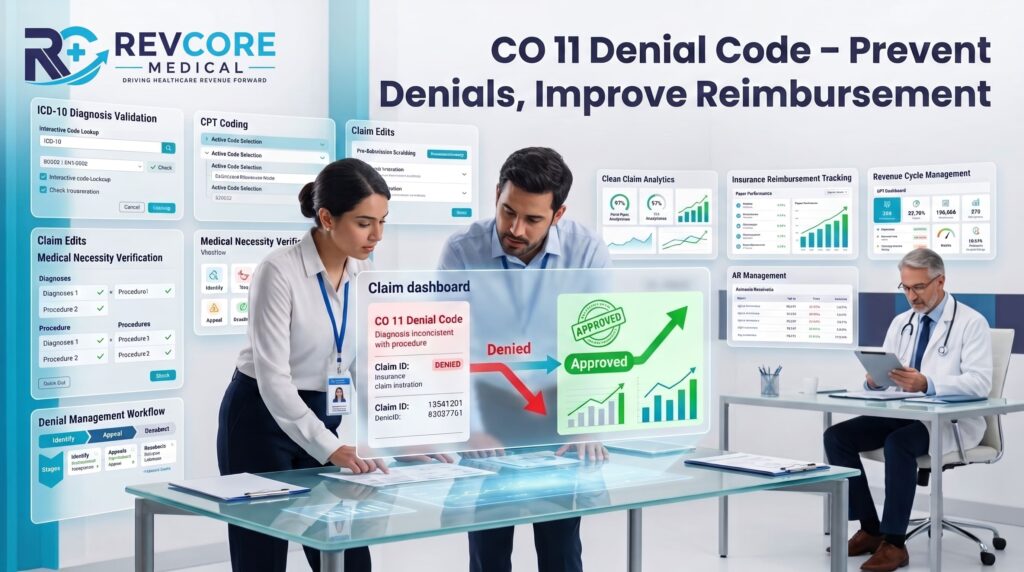
The CO 11 Denial Code generally indicates that the diagnosis reported on the claim is inconsistent with the procedure performed or does not support medical necessity according to payer guidelines. Although this denial can often be corrected, repeated occurrences may significantly reduce practice revenue and increase Accounts Receivable (AR).
At RevCore Medical, we specialize in helping healthcare providers eliminate preventable denials through expert Medical Billing, Medical Coding, Revenue Cycle Management, Eligibility Verification, Provider Credentialing, Prior Authorization, AR Management, Medical Billing Audits, and No Cost Billing Analysis. Our experienced billing professionals identify coding issues before claims are submitted, helping practices achieve higher first-pass claim acceptance rates.
This comprehensive guide explains everything providers need to know about the CO 11 Denial Code, including its causes, prevention strategies, documentation requirements, and best billing practices.
What is the CO 11 Denial Code?
The CO 11 Denial Code is a Claim Adjustment Reason Code (CARC) used by insurance companies when the diagnosis submitted on the claim does not appropriately support the billed procedure or service. In many cases, the payer determines that the diagnosis code does not justify the medical necessity of the treatment provided.
Receiving a CO 11 Denial Code does not always mean the service was unnecessary. Instead, it often indicates that the diagnosis, documentation, or coding requires correction before reimbursement can be approved.
Healthcare providers should carefully review clinical documentation, diagnosis coding, and payer-specific policies whenever a CO 11 Denial Code is received.
Why the CO 11 Denial Code Matters
Ignoring the CO 11 Denial Code can have serious financial consequences for healthcare organizations. Denied claims delay payments, increase administrative workload, and require additional staff time for appeals and corrections.
Proper management of the CO 11 Denial Code offers several important benefits:
- Improves first-pass claim acceptance
- Reduces Accounts Receivable (AR) days
- Accelerates insurance reimbursement
- Improves coding accuracy
- Reduces administrative costs
- Supports payer compliance
- Enhances Revenue Cycle Management
- Increases practice profitability
- Minimizes claim rework
- Strengthens financial performance
Healthcare providers that proactively address the CO 11 Denial Code often experience significant improvements in operational efficiency and cash flow.
Common Causes of the CO 11 Denial Code
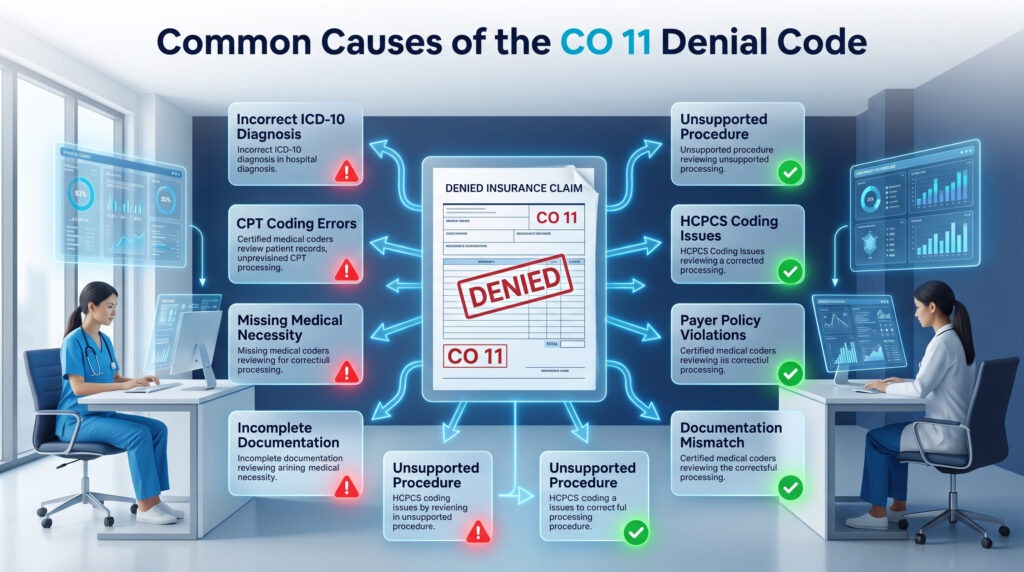
Several coding and documentation issues can trigger the CO 11 Denial Code. Understanding these causes helps providers prevent future denials.
The most common reasons include:
Incorrect ICD-10 Diagnosis Code
An inaccurate or incomplete diagnosis code may fail to support the medical necessity of the procedure billed.
Diagnosis Does Not Support the Procedure
The diagnosis submitted may not justify the service according to payer medical policies.
Incomplete Clinical Documentation
Missing physician notes, treatment plans, or supporting documentation frequently result in a CO 11 Denial Code.
Coding Errors
Incorrect CPT, HCPCS, or ICD-10 code combinations may create inconsistencies that lead to claim denial.
Outdated Coding References
Using expired ICD-10 or CPT codes increases the likelihood of receiving a CO 11 Denial Code.
Missing Medical Necessity
Insurance carriers require documentation demonstrating that the service was medically necessary based on the patient’s condition.
Payer-Specific Coverage Policies
Different insurance companies apply unique medical necessity guidelines. Failure to follow these policies often results in denials.
Documentation Inconsistencies
Clinical notes, diagnosis codes, and billed procedures should accurately reflect the patient’s treatment. Any inconsistency may trigger the CO 11 Denial Code.
Financial Impact of the CO 11 Denial Code
Repeated CO 11 Denial Code occurrences can significantly affect healthcare organizations.
Potential financial consequences include:
- Delayed insurance payments
- Increased Accounts Receivable balances
- Higher operational costs
- Additional staff workload
- More claim appeals
- Reduced cash flow
- Lower reimbursement rates
- Increased compliance risks
- Decreased provider productivity
- Revenue leakage
Preventing even a small percentage of these denials can substantially improve overall financial performance.
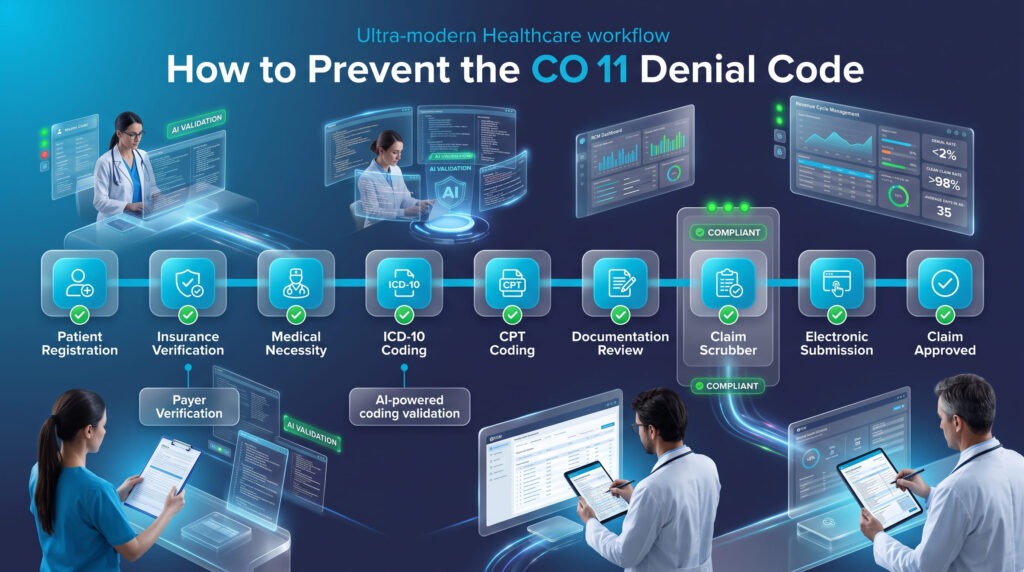
How to Prevent the CO 11 Denial Code
The most effective strategy is preventing the CO 11 Denial Code before the claim reaches the payer.
Healthcare providers should implement these best practices:
- Verify insurance eligibility before treatment.
- Confirm medical necessity.
- Review payer coverage guidelines.
- Assign accurate ICD-10 diagnosis codes.
- Report appropriate CPT and HCPCS codes.
- Maintain complete clinical documentation.
- Conduct internal coding audits.
- Train billing and coding staff regularly.
- Use electronic claim scrubbing software.
- Monitor denial trends monthly.
Combining these preventive measures significantly reduces denial rates and improves reimbursement.
Documentation Requirements to Avoid the CO 11 Denial Code
Proper documentation is one of the strongest defenses against the CO 11 Denial Code.
Every patient record should include:
- Complete patient demographics
- Physician assessment
- Medical history
- Accurate diagnosis
- Treatment plan
- Clinical findings
- Medical necessity documentation
- Procedure details
- Provider signature
- Supporting laboratory or imaging reports when applicable
Thorough documentation helps establish the connection between the diagnosis and the billed procedure, improving claim approval rates.
How RevCore Medical Helps Eliminate CO 11 Denial Code Issues
At RevCore Medical, we understand how costly denied claims can be for healthcare organizations. Our experienced Revenue Cycle Management professionals use advanced billing technology, certified medical coders, and payer-specific expertise to reduce preventable denials before claims are submitted.
Our comprehensive solutions include:
- Revenue Cycle Management
- Medical Billing Services
- Certified Medical Coding
- Eligibility Verification
- Prior Authorization
- Provider Credentialing
- AR Management
- Medical Billing Audits
- No Cost Billing Analysis
- Denial Management and Appeals
Our proactive claim review process helps identify diagnosis inconsistencies, coding errors, and documentation deficiencies that commonly result in the CO 11 Denial Code.
By partnering with RevCore Medical, providers can improve coding accuracy, reduce denial rates, accelerate reimbursement, and strengthen their overall financial performance.
Best Practices for Managing the CO 11 Denial Code
Successfully managing the CO 11 Denial Code requires a proactive approach to coding accuracy, clinical documentation, and denial prevention. Healthcare organizations that continuously monitor claim quality and payer requirements experience fewer denials and improved reimbursement.
Implement these best practices to reduce the occurrence of the CO 11 Denial Code:
- Verify patient insurance eligibility before every visit.
- Confirm medical necessity based on payer guidelines.
- Assign the most accurate ICD-10 diagnosis codes.
- Match diagnosis codes appropriately with CPT and HCPCS procedure codes.
- Review payer-specific medical policies before claim submission.
- Maintain complete physician documentation.
- Perform internal coding audits regularly.
- Utilize electronic claim scrubbing software.
- Train coding and billing staff on annual coding updates.
- Monitor denial reports to identify recurring trends.
- Conduct periodic compliance reviews.
- Submit clean claims electronically for faster processing.
Following these best practices helps improve first-pass claim acceptance and reduces unnecessary payment delays.

Step-by-Step Appeal Process for the CO 11 Denial Code
Receiving a Denial Code does not necessarily mean reimbursement is lost. Many claims can be successfully corrected and appealed when supported by complete documentation.
1. Review the Explanation of Benefits (EOB)
Identify the exact reason for the Denial Code and determine whether the issue involves diagnosis coding, documentation, or payer policy.
2. Verify Clinical Documentation
Ensure physician notes clearly support the diagnosis and medical necessity of the billed procedure.
3. Review ICD-10, CPT, and HCPCS Codes
Confirm that all diagnosis and procedure codes accurately reflect the services provided.
4. Correct Coding Errors
Update incorrect diagnosis or procedure codes when documentation supports the correction.
5. Attach Supporting Documentation
Include physician notes, operative reports, laboratory results, imaging reports, treatment plans, or other clinical records that validate medical necessity.
6. Submit a Timely Appeal
File the corrected claim or formal appeal within the payer’s required filing timeframe.
7. Monitor Appeal Status
Track the appeal through resolution and promptly respond to any additional documentation requests from the insurance carrier.
Why Outsource CO 11 Denial Code Management?
Managing claim denials internally can consume valuable staff time and delay reimbursement. Outsourcing denial management to RevCore Medical allows healthcare providers to focus on patient care while experienced revenue cycle professionals handle complex billing challenges.
Benefits of outsourcing include:
- Higher first-pass claim acceptance
- Reduced denial rates
- Faster reimbursement
- Improved coding accuracy
- Experienced denial specialists
- Lower administrative costs
- Better cash flow
- Increased collections
- Ongoing compliance monitoring
- Comprehensive Revenue Cycle Management support
Our dedicated team continuously monitors payer policies, coding updates, and denial trends to minimize future occurrences of the CO 11 Denial Code.
Why Choose RevCore Medical?
RevCore Medical is committed to helping healthcare providers strengthen financial performance through accurate coding, efficient billing, and comprehensive Revenue Cycle Management.
Our nationwide services include:
- Revenue Cycle Management
- Medical Billing
- Medical Coding
- Provider Credentialing
- Eligibility Verification
- Prior Authorization
- Accounts Receivable (AR) Management
- Medical Billing Audits
- Denial Management
- No Cost Billing Analysis
By combining experienced billing professionals with advanced healthcare technology, we help providers reduce denials, accelerate insurance payments, and maximize reimbursement.
Healthcare Providers We Support
RevCore Medical proudly partners with a wide range of healthcare organizations, including:
- Primary Care Practices
- Family Medicine Clinics
- Internal Medicine Providers
- Urgent Care Centers
- Orthopedic Practices
- Cardiology Clinics
- Pain Management Specialists
- Gastroenterology Practices
- Dermatology Clinics
- Neurology Providers
- Endocrinology Practices
- Women’s Health Clinics
- Behavioral Health Providers
- Ambulatory Surgery Centers
- Multi-Specialty Medical Groups
- Hospitals and Health Systems
Our tailored Revenue Cycle Management solutions help providers of every size improve operational efficiency and financial outcomes.
Serving Healthcare Providers Across the United States
RevCore Medical proudly serves healthcare providers nationwide, delivering expert Medical Billing, Medical Coding, Revenue Cycle Management, and denial management services to practices in New York City, Los Angeles, Chicago, Houston, Phoenix, Philadelphia, San Antonio, San Diego, Dallas, San Jose, Austin, Jacksonville, Fort Worth, Columbus, Charlotte, Indianapolis, Seattle, Denver, Boston, Nashville, Atlanta, Miami, Orlando, Tampa, Las Vegas, Sacramento, Minneapolis, Kansas City, Washington, D.C., Baltimore, Portland, Salt Lake City, Raleigh, Cleveland, Detroit, Cincinnati, St. Louis, Pittsburgh, and surrounding communities. Our experienced team supports physician offices, specialty clinics, hospitals, outpatient facilities, and healthcare organizations throughout the United States.
Frequently Asked Questions
What does the CO 11 Denial Code mean?
The CO 11 Denial Code indicates that the diagnosis submitted does not support the billed procedure or medical necessity according to payer guidelines.
Can the CO 11 Denial Code be appealed?
Yes. Most CO 11 Denial Code claims can be appealed after correcting coding errors or providing additional supporting documentation.
What causes the CO 11 Denial Code?
Common causes include incorrect ICD-10 diagnosis codes, incomplete documentation, coding inconsistencies, missing medical necessity, and payer-specific policy requirements.
How can providers prevent the CO 11 Denial Code?
Providers can reduce denials by verifying insurance, assigning accurate diagnosis codes, maintaining complete documentation, and performing routine coding audits.
Does RevCore Medical provide denial management?
Yes. We offer complete denial management, claim correction, appeal services, Medical Billing, Medical Coding, and Revenue Cycle Management.
Why is documentation important?
Proper documentation establishes medical necessity and supports the diagnosis-procedure relationship required for reimbursement.
How does Revenue Cycle Management reduce denials?
Revenue Cycle Management improves coding accuracy, verifies eligibility, monitors claims, identifies billing issues early, and reduces preventable denials.
Which healthcare providers benefit from these services?
Hospitals, physician groups, specialty practices, outpatient clinics, urgent care centers, and independent providers all benefit from expert denial management.
What additional services does RevCore Medical offer?
Our services include Medical Billing, Medical Coding, Provider Credentialing, Eligibility Verification, Prior Authorization, AR Management, Medical Billing Audits, and No Cost Billing Analysis.
How can I improve my practice’s reimbursement?
Partnering with experienced Revenue Cycle Management professionals helps reduce denials, improve coding accuracy, accelerate payments, and maximize collections.
Optimize Your Revenue Cycle with RevCore Medical
Every CO 11 Denial Code represents delayed revenue and unnecessary administrative work. Preventing these denials begins with accurate coding, complete documentation, and proactive Revenue Cycle Management. RevCore Medical helps healthcare providers reduce claim denials, improve reimbursement, and maintain compliance through comprehensive billing solutions.
Whether you need Medical Billing, Medical Coding, Provider Credentialing, Eligibility Verification, Prior Authorization, AR Management, Medical Billing Audits, or complete Revenue Cycle Management, our experienced professionals are ready to support your practice.
Request Your FREE No Cost Billing Analysis Today!
✔ Reduce Claim Denials
✔ Improve Coding Accuracy
✔ Accelerate Insurance Payments
✔ Increase Revenue Collections
✔ Strengthen Your Revenue Cycle
RevCore Medical — Your Trusted Revenue Cycle Management & Medical Billing Partner Across the United States.