
Introduction
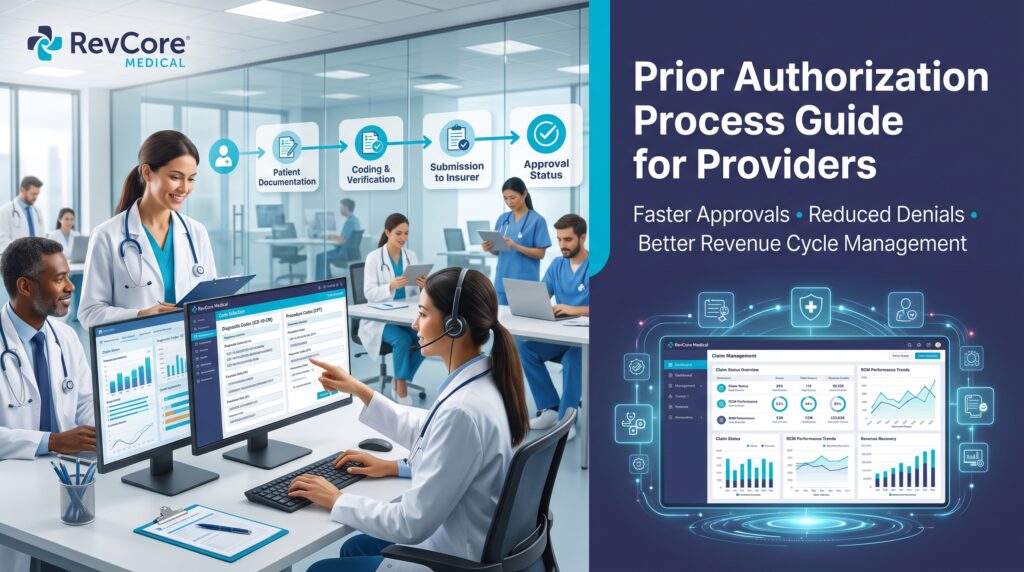
Understanding the Prior Authorization Process is essential for physicians, hospitals, specialty clinics, behavioral health providers, ambulatory surgery centers, and healthcare organizations throughout the United States. Prior authorization has become a standard requirement for many medications, diagnostic procedures, surgeries, imaging services, and specialty treatments before insurance companies approve payment.
An effective Prior Authorization Process helps healthcare organizations minimize treatment delays, improve reimbursement success, reduce claim denials, and strengthen revenue cycle performance. Accurate documentation, timely communication with insurance payers, and organized workflows are critical components of successful authorization management.
At RevCore Medical, we help healthcare providers streamline the entire authorization workflow through comprehensive Revenue Cycle Management, Medical Billing, Medical Coding, Eligibility Verification, Provider Credentialing, AR Management, Medical Billing Audits, Dental Billing, and Prior Authorization Services.
This comprehensive Prior Authorization Process explains every stage of the authorization process, common challenges, documentation requirements, and best practices that improve operational efficiency.
What Is Prior Authorization?
The Prior Authorization Process begins with understanding prior authorization itself.
Prior authorization is the process in which a healthcare provider obtains approval from a patient’s insurance company before delivering specific medical services, medications, procedures, or diagnostic tests. Insurance carriers use this review process to determine whether a requested treatment meets coverage policies and medical necessity guidelines.
The prior authorization process protects payer resources while ensuring medically appropriate care according to established clinical criteria.
Why Prior Authorization Matters
An organized Prior Authorization Process plays a major role in healthcare operations.
Benefits include:
- Faster insurance approvals
- Reduced claim denials
- Improved reimbursement accuracy
- Better patient scheduling
- Fewer treatment delays
- Stronger payer compliance
- Improved revenue cycle performance
- Enhanced administrative efficiency
Healthcare organizations that follow a structured authorization process experience smoother financial workflows and better patient care coordination.
Prior Authorization Process: Step-by-Step Workflow
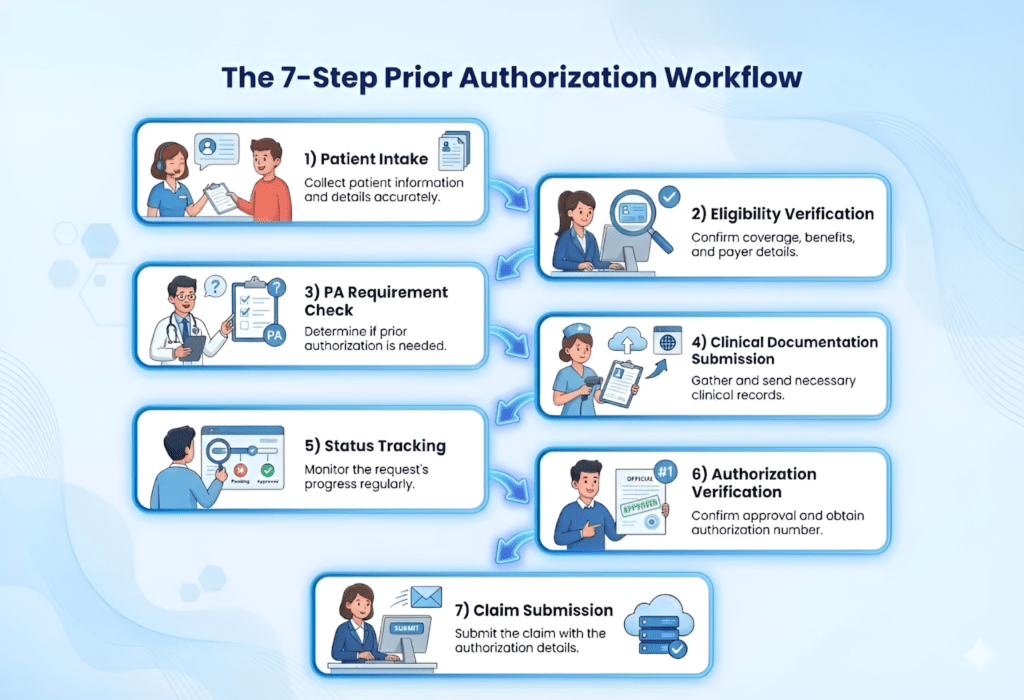
A successful Prior Authorization Process includes several coordinated stages.
Step 1: Verify Patient Insurance
Before initiating any authorization request, verify:
- Active insurance coverage
- Policy details
- Network participation
- Benefits eligibility
- Coverage limitations
Insurance verification helps determine whether authorization is required.
Step 2: Identify Authorization Requirements
Not every service requires prior authorization.
Providers should review:
- Payer policies
- Procedure requirements
- Medication formularies
- Imaging guidelines
- Specialty treatment rules
Understanding payer-specific requirements prevents unnecessary delays.
Step 3: Collect Clinical Documentation
The Prior Authorization Process requires complete supporting documentation.
Common documents include:
- Physician notes
- Diagnosis information
- Medical history
- Treatment plans
- Laboratory reports
- Imaging results
- Clinical assessments
- Progress notes
Well-prepared documentation increases approval success rates.
Step 4: Medical Coding
Accurate coding supports every authorization request.
Required coding may include:
- ICD-10-CM diagnosis codes
- CPT procedure codes
- HCPCS codes
- Supporting modifiers
Coding accuracy directly affects payer review and approval decisions.
Step 5: Submit Authorization Request
Providers submit requests through:
- Insurance portals
- Electronic authorization systems
- Fax submissions
- Telephone authorization centers
- Clearinghouse platforms
Electronic submission often reduces turnaround times.
Step 6: Monitor Authorization Status
After submission, providers should regularly monitor:
- Pending requests
- Additional information requests
- Clinical review updates
- Approval notifications
- Denial notices
Continuous monitoring prevents unnecessary treatment delays.
Step 7: Respond to Additional Documentation Requests
Insurance companies may require additional records.
Timely responses help avoid:
- Authorization expiration
- Request cancellation
- Treatment delays
- Claim denials
Maintaining organized documentation improves response efficiency.
Step 8: Receive Approval or Denial
The authorization process concludes with one of three outcomes:
- Approved
- Denied
- Additional review required
Providers should review payer decisions carefully before scheduling services.
Step 9: Appeal Denied Requests
If authorization is denied, providers should:
- Review denial reasons
- Correct documentation deficiencies
- Submit supporting clinical evidence
- File formal appeals
- Track appeal outcomes
An organized appeals process improves approval opportunities.
Documentation Requirements
Proper documentation remains the foundation of every Prior Authorization Process.
Essential records include:
- Patient demographics
- Insurance information
- Physician documentation
- Diagnosis details
- Medical necessity
- Treatment history
- Supporting clinical evidence
- Laboratory results
- Imaging reports
Complete documentation strengthens payer review.
Common Challenges
Healthcare organizations frequently encounter obstacles while following the Prior Authorization Process.
Common challenges include:
- Incomplete documentation
- Insurance policy changes
- Coding inaccuracies
- Communication delays
- High authorization volume
- Manual processing
- Payer-specific requirements
- Expired authorizations
- Staffing shortages
Efficient workflows help minimize these operational challenges.
Best Practices for Prior Authorization
Healthcare providers can improve outcomes by following these best practices:
- Verify insurance before appointments.
- Maintain updated payer requirements.
- Submit complete documentation.
- Use accurate ICD-10-CM and CPT coding.
- Monitor authorization requests daily.
- Respond promptly to payer inquiries.
- Track authorization expiration dates.
- Maintain organized electronic records.
- Train staff regularly.
- Conduct periodic workflow reviews.
These practices support faster approvals and stronger financial performance.
How Prior Authorization Supports Revenue Cycle Management
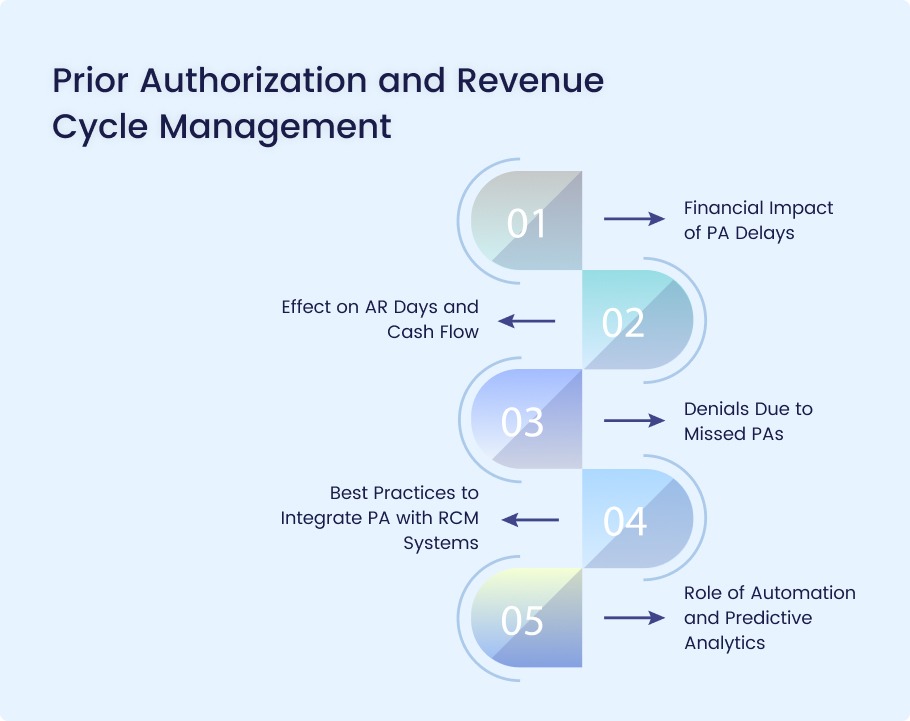
The Prior Authorization Process is closely connected to Revenue Cycle Management.
Successful authorization management helps:
- Improve reimbursement rates
- Reduce denied claims
- Increase clean claim submissions
- Shorten payment cycles
- Improve cash flow
- Reduce administrative costs
- Strengthen patient satisfaction
Authorization efficiency positively impacts every stage of the healthcare revenue cycle.
RevCore Medical Services
RevCore Medical provides comprehensive revenue cycle solutions that complement the Prior Authorization Process.
Prior Authorization Services
Complete authorization request management from submission through approval.
Revenue Cycle Management
End-to-end financial workflow optimization.
Medical Billing
Accurate claims submission and reimbursement management.
Medical Coding
Certified ICD-10-CM, CPT, and HCPCS coding.
Eligibility Verification
Insurance validation before treatment.
AR Management
Recovery of unpaid claims and accounts receivable optimization.
Provider Credentialing
Insurance enrollment and payer participation.
Medical Billing Audits
Billing reviews, coding audits, and revenue leakage analysis.
Dental Billing
Comprehensive dental insurance billing support.
Why Choose RevCore Medical?
Healthcare providers nationwide trust RevCore Medical because we deliver:
- Experienced authorization specialists
- Faster approval turnaround
- Certified coding expertise
- End-to-end revenue cycle support
- Nationwide healthcare experience
- Transparent reporting
- Reduced administrative burden
- Improved reimbursement performance
Our team helps providers focus on patient care while we manage administrative complexities.
Major Service Areas Across the United States
RevCore Medical proudly supports healthcare providers throughout the United States, including New York City, Los Angeles, Chicago, Houston, Dallas, Phoenix, Philadelphia, San Antonio, San Diego, San Jose, Austin, Jacksonville, Fort Worth, Columbus, Charlotte, Indianapolis, Seattle, Denver, Boston, Atlanta, Nashville, Miami, Orlando, Tampa, Las Vegas, Sacramento, Minneapolis, Kansas City, and Washington, D.C. We also provide nationwide support to hospitals, physician groups, specialty clinics, behavioral health providers, ambulatory surgery centers, urgent care facilities, and rural healthcare organizations.
Frequently Asked Questions
What is prior authorization?
Prior authorization is insurance approval required before certain treatments, procedures, medications, or services are provided.
Why is prior authorization important?
It confirms medical necessity and payer coverage while reducing reimbursement issues.
Who performs prior authorization?
Healthcare providers, authorization specialists, and medical billing teams typically manage the process.
What documents are required?
Physician notes, diagnosis codes, treatment plans, clinical records, and supporting documentation.
How long does authorization take?
Approval timelines vary depending on payer policies and service complexity.
6. Can prior authorization reduce claim denials?
Yes. Proper authorization significantly improves claim acceptance rates.
Does RevCore Medical provide prior authorization services?
Yes. We provide complete authorization management for healthcare providers across the United States.
What happens if authorization is denied?
Providers may submit additional documentation or file an appeal based on payer requirements.
How does prior authorization affect revenue cycle management?
Efficient authorization supports clean claims, faster reimbursement, and improved cash flow.
Which specialties benefit from prior authorization services?
Primary care, cardiology, orthopedics, oncology, behavioral health, gastroenterology, radiology, neurology, pain management, and many other specialties.
Partner with RevCore Medical Today
Managing the Prior Authorization Process requires accuracy, efficiency, and industry expertise. RevCore Medical delivers complete authorization support that helps healthcare providers reduce administrative burdens, accelerate approvals, and improve reimbursement outcomes.
Request Your Free Revenue Cycle Assessment
✔ Faster Prior Authorizations
✔ Reduced Claim Denials
✔ Improved Cash Flow
✔ Stronger Revenue Cycle Performance
✔ Nationwide Healthcare Billing Support
RevCore Medical — Your Trusted Prior Authorization and Revenue Cycle Management Partner Across the United States.